
In a black obsidian vs black tourmaline comparison, neither material can be proven to protect a wearer from harm, illness, unwanted events, or invisible forces. Protection is a cultural and symbolic theme used in jewelry discussions. The practical choice depends on appearance, disclosed material, construction, care, price, and the meaning you personally prefer.
The two materials are also geologically different. Obsidian is volcanic glass, while black tourmaline is generally associated with iron-rich tourmaline such as schorl. Understanding that difference helps buyers compare jewelry without turning symbolism into a product claim.
Black Obsidian vs Black Tourmaline: Quick Comparison
| Factor | Black Obsidian | Black Tourmaline |
|---|---|---|
| Material category | Volcanic glass | Tourmaline mineral group, often schorl when black |
| Common jewelry look | Smooth, glassy, polished black | Black with a glassy to more textured appearance, depending on cut and finish |
| Symbolic theme | Boundaries, reflection, grounding symbolism | Boundaries, steadiness, grounding symbolism |
| Proven protection effect | None | None |
| Buyer priority | Verify material wording and inspect finish | Verify material wording and inspect finish |
This table describes broad material categories, not a way to identify a product from a photograph.
What Is Black Obsidian?
Obsidian forms when lava cools rapidly enough to produce volcanic glass. The U.S. Geological Survey describes obsidian as black or dark-colored volcanic glass.
Polished obsidian can have a smooth, reflective appearance. In bracelet symbolism, it is often connected with clear boundaries, self-reflection, and grounding themes. These interpretations are cultural or personal.
A product labeled black obsidian should be evaluated through the seller's material statement and any supporting documentation. A glossy black bead is not proof by itself. If you are comparing another polished black material, use our guide to assessing whether a black onyx bracelet is real without treating onyx and obsidian as interchangeable.
For Aura & Crysta's established symbolic owner, read Black Obsidian Bracelet Meaning and Benefits.
What Is Black Tourmaline?
Tourmaline is a mineral group with several species and a wide color range. GIA explains that schorl is typically black and rich in iron. Some black tourmaline jewelry uses polished beads, while other pieces keep more visible crystal texture.
In contemporary symbolism, black tourmaline is often associated with steadiness and personal boundaries. That symbolic use does not establish an effect.
Aura & Crysta does not currently list a black-tourmaline bracelet in the product set used for this guide. The article should not imply that a pictured Aura & Crysta product contains tourmaline.
Which Is Better for Protection Symbolism?
There is no objective winner. A buyer may prefer black obsidian for its glassy appearance and reflection-related symbolism, or black tourmaline for its mineral-crystal identity and steadiness-related symbolism.
Choose based on the story and design that you genuinely appreciate. Do not use one material as a substitute for safety precautions, medical care, financial decisions, or professional advice.
If a seller says one bracelet guarantees protection, blocks harmful forces, or prevents bad events, treat that as an unsupported claim rather than a quality advantage.
Appearance and Styling Differences
Black Obsidian Jewelry
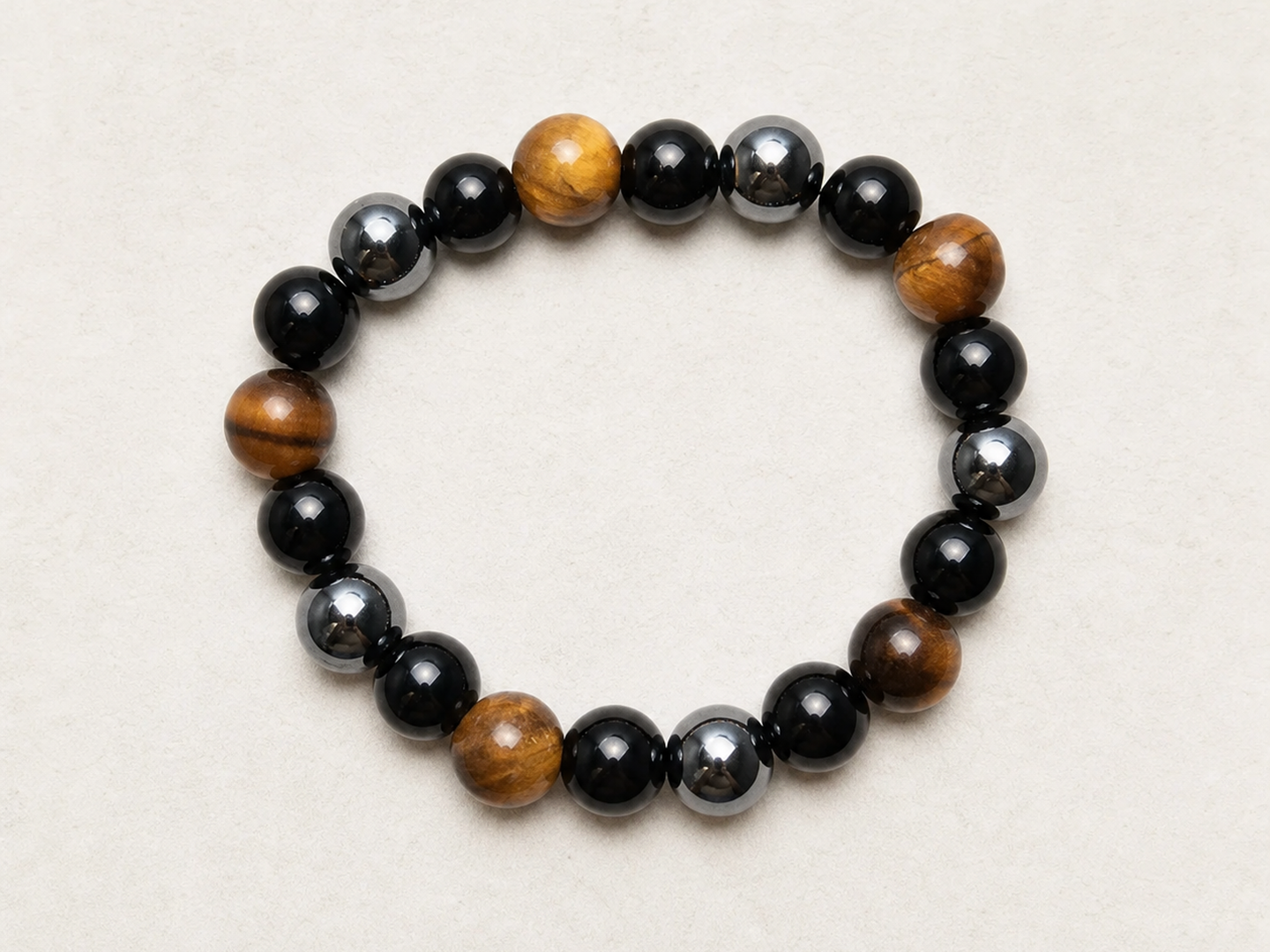
Polished obsidian beads may look smooth, dark, and reflective. That clean surface can suit minimal black jewelry or a mixed design with tiger eye and metallic-gray beads.
Black Tourmaline Jewelry
Black tourmaline can appear polished or more visibly textured. The look depends on the material, cut, finish, and design. A rough-looking surface does not automatically prove identity, and a smooth surface does not automatically disprove it.
Choosing by Style
Ask whether you want:
- a smooth, glassy black look;
- visible crystal texture;
- a single-material bracelet;
- a mixed-bead arrangement;
- a focal charm or simple strand;
- jewelry that can be worn alone or stacked.
Style is a legitimate buying reason. It does not need a performance claim.
Durability and Care Considerations
Obsidian is glassy and can chip or scratch if struck. Tourmaline's care depends on the form, finish, inclusions, and construction of the jewelry. In both cases, the bracelet's stringing and decorative components may be more vulnerable than the beads.
Use conservative care:
- remove the bracelet before bathing or swimming;
- avoid heavy exercise and hands-on cleaning;
- keep perfume, lotion, salt water, pool water, and harsh cleaners away;
- wipe gently with a soft cloth;
- store separately from harder or sharp jewelry;
- inspect it after a drop or pull.
Follow the seller's confirmed care guidance. Do not assume water resistance, elastic type, metal content, or repairability.
How to Compare Product Listings
Read the Exact Material Statement
Look for direct wording. Distinguish black obsidian, black tourmaline, tourmaline-style, glass, and unspecified black stone. If a listing is unclear, ask before buying.
Review More Than One Photo
Use full-product, side, and close-up views. Lighting can change how black beads appear. Photos support visual comparison but not definitive identification.
Check Measurements and Construction
Use confirmed bead size, bracelet length, fit, clasp, or stretch information only when stated. Do not estimate from a model or background object.
Look for Support Behind Premium Claims
Terms such as rare, certified, untreated, natural, or a named origin require meaningful support when they affect the price. Do not assume that a generic card is independent verification.
Compare Commercial Terms
Check price, stock, shipping, returns, contact information, and customer support. The current product page should be the final source at purchase time.
Can You Wear Black Obsidian and Black Tourmaline Together?
You can wear two bracelets together if they fit comfortably and do not rub, catch, or interfere with activity. Combining materials does not multiply or guarantee symbolism.
Start with one bracelet on each wrist or a simple two-piece stack. Remove one if the arrangement feels heavy or repeatedly contacts a desk.
For broad wrist guidance, see Which Hand Should You Wear a Crystal Bracelet On?. For advice specific to obsidian, use the black obsidian wrist guide.
Aura & Crysta's Current Black Obsidian-Related Option
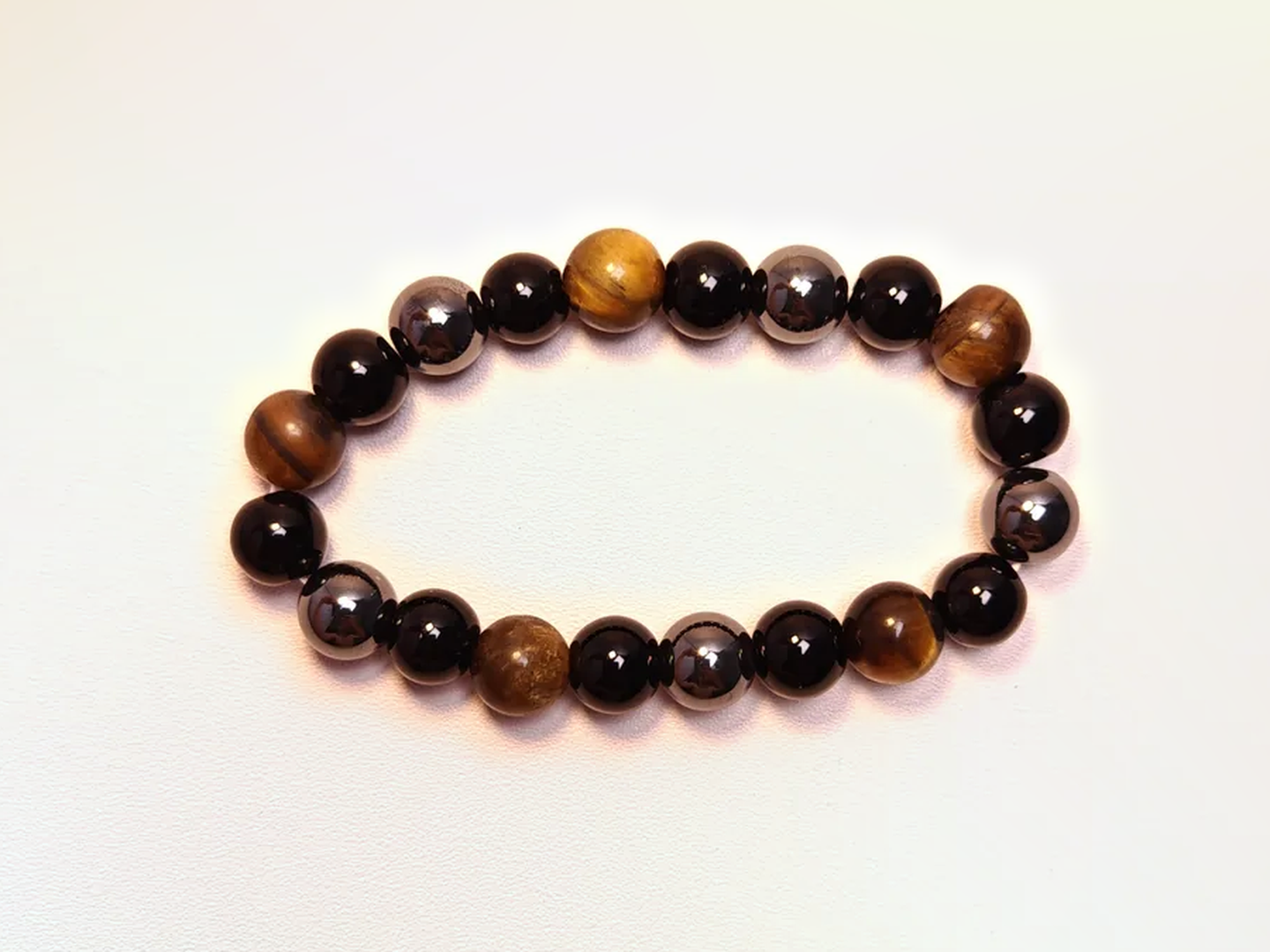
Aura & Crysta's Tiger Eye, Obsidian & Hematite Protection Bracelet is a mixed design connected with the obsidian side of this comparison. It is not a black-tourmaline bracelet.
Use the current listing to review the stated materials, complete gallery, fit or construction information when available, price, stock, and care. In the product name, Protection is a symbolic theme and not a promise of safety or another outcome.
Browse the Protection & Luck collection to compare Aura & Crysta's currently offered dark and mixed-bead designs.
Buyer Decision Checklist
- Do I prefer smooth volcanic-glass styling or tourmaline's possible crystal texture?
- Does the seller clearly state the material?
- Is the appearance shown in several photos?
- Are fit and construction details sufficient?
- Is a premium claim supported?
- Do I understand the care requirements?
- Am I choosing symbolism without expecting a real-world result?
- Have I checked current shipping and returns?
Frequently Asked Questions
Is black obsidian or black tourmaline better for protection?
Neither has a proven protective effect. Choose according to appearance, disclosed material, care, price, and the symbolic story you prefer.
Are black obsidian and black tourmaline the same?
No. Obsidian is volcanic glass. Tourmaline is a mineral group, and black tourmaline is commonly associated with schorl.
Can photos tell the difference?
Not reliably in every case. Lighting, polish, imitation materials, and image processing can make black beads look similar. Use seller documentation or independent testing when identification is important.
Which material is easier to style?
Both can work as dark neutral jewelry. Obsidian often offers a smooth reflective look, while tourmaline may provide more texture depending on its finish.
Does Aura & Crysta sell a black tourmaline bracelet?
Not in the current product set used for this article. The relevant Aura & Crysta product is a mixed tiger eye, obsidian, and hematite design.
Final Takeaway
The black obsidian vs black tourmaline decision should begin with facts: volcanic glass versus a tourmaline mineral, visible style, disclosed materials, care, fit, and seller support. Neither is objectively better at creating protection.
Use symbolism as cultural or personal context, then choose the jewelry you would still appreciate for its design and confirmed details. Explore Black Obsidian Bracelet Guides for related material, care, and wearing information.
Crystal meanings are for spiritual, cultural, and decorative purposes only. They are not medical, financial, protective-performance, or guaranteed-result claims.