
If you are wondering which hand to wear a crystal bracelet on, either wrist can be appropriate. Start with comfort, dominant-hand activity, watch placement, fit, and the bracelet's confirmed construction. Left-versus-right symbolism can be added as personal context, but it is not a universal rule and does not change what the jewelry can do.
This broad guide helps you choose a wrist without repeating the material-specific advice already covered in Aura & Crysta's amethyst, black obsidian, tiger eye, and hematite articles.
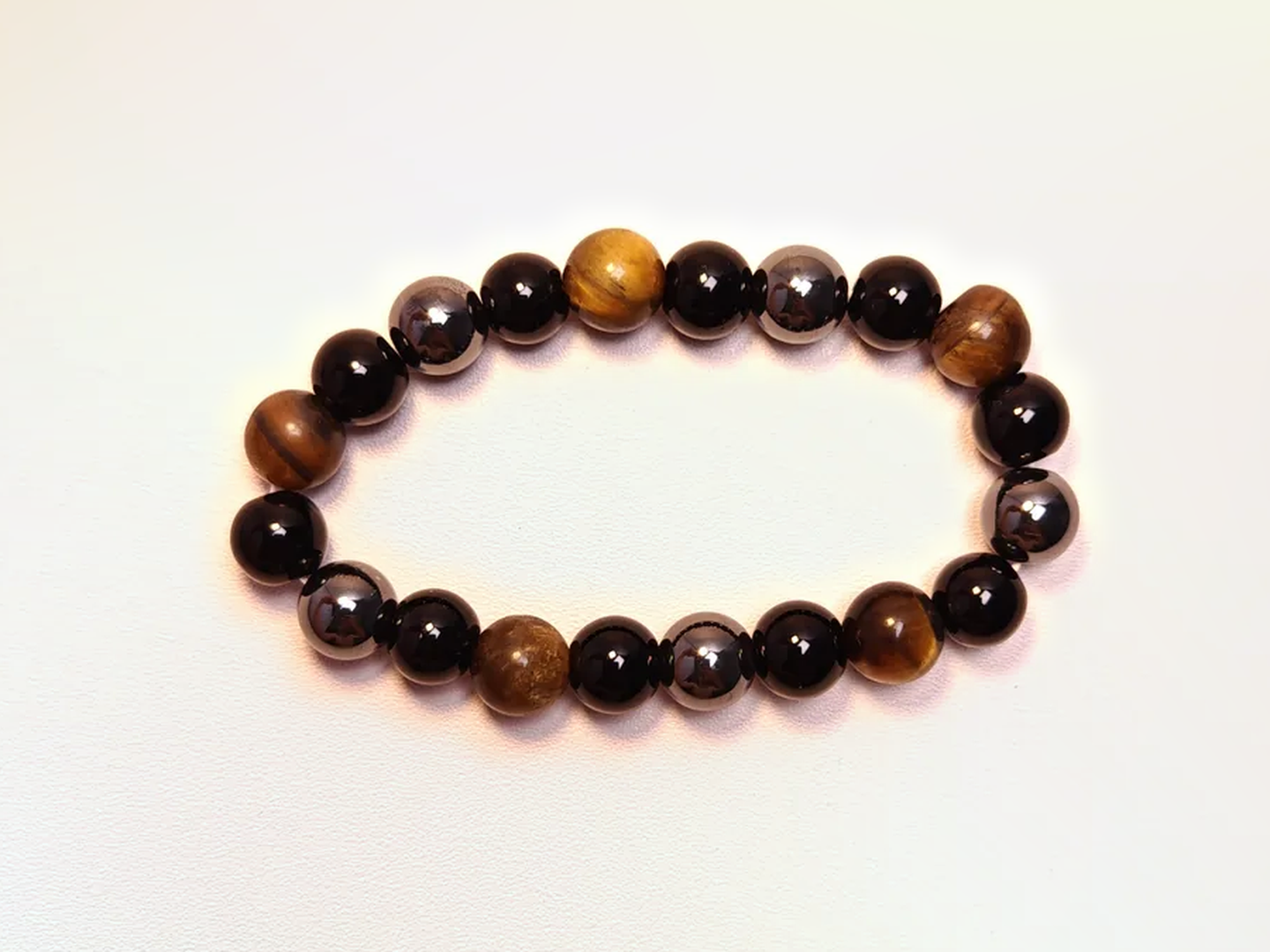
Which Hand to Wear a Crystal Bracelet: Quick Answer
Use this order:
- Try the bracelet on your non-dominant wrist.
- Type, write, use your phone, and carry a bag.
- Check whether it rubs against a watch or work surface.
- Review the actual fit and construction information.
- Switch wrists if the other side is more comfortable.
- Use optional symbolism only after the practical check.
There is no single correct wrist for every bracelet or wearer. You can also change wrists when your activity, outfit, or watch arrangement changes.
Why the Non-Dominant Wrist Is a Useful Starting Point
The non-dominant hand often performs fewer precise or repetitive tasks. A right-handed person may therefore begin with the left wrist, while a left-handed person may begin with the right.
This is only a starting point. A watch, keyboard position, work tool, bag strap, or personal habit may make the dominant wrist more comfortable. Test both sides rather than treating handedness as a fixed answer.
If the bracelet repeatedly hits a desk, catches on clothing, pinches, or restricts movement, remove it and review the fit. A different wrist cannot correct an unsuitable size or construction.
What Do Left and Right Wrist Traditions Mean?
Some contemporary crystal-bracelet traditions describe the left side as receiving or inward-facing and the right side as expressive or outward-facing. These interpretations differ across sources and are not product instructions.
A wearer may use the left wrist as a personal reminder to reflect, or the right wrist as a reminder to act deliberately. The value is in the wearer's chosen meaning. The wrist does not create a guaranteed physical, financial, emotional, or protective result.
When a material-specific tradition matters to you, use the dedicated guide for that material instead of applying one broad rule to every bracelet. For specific examples, read about jade bracelet meaning or garnet bracelet meaning.
Does the Crystal Type Change the Practical Rule?
Usually, the same practical checks still apply. Material names may change the symbolic story, color, surface, and care needs, but comfort and construction remain central.
Amethyst Bracelets
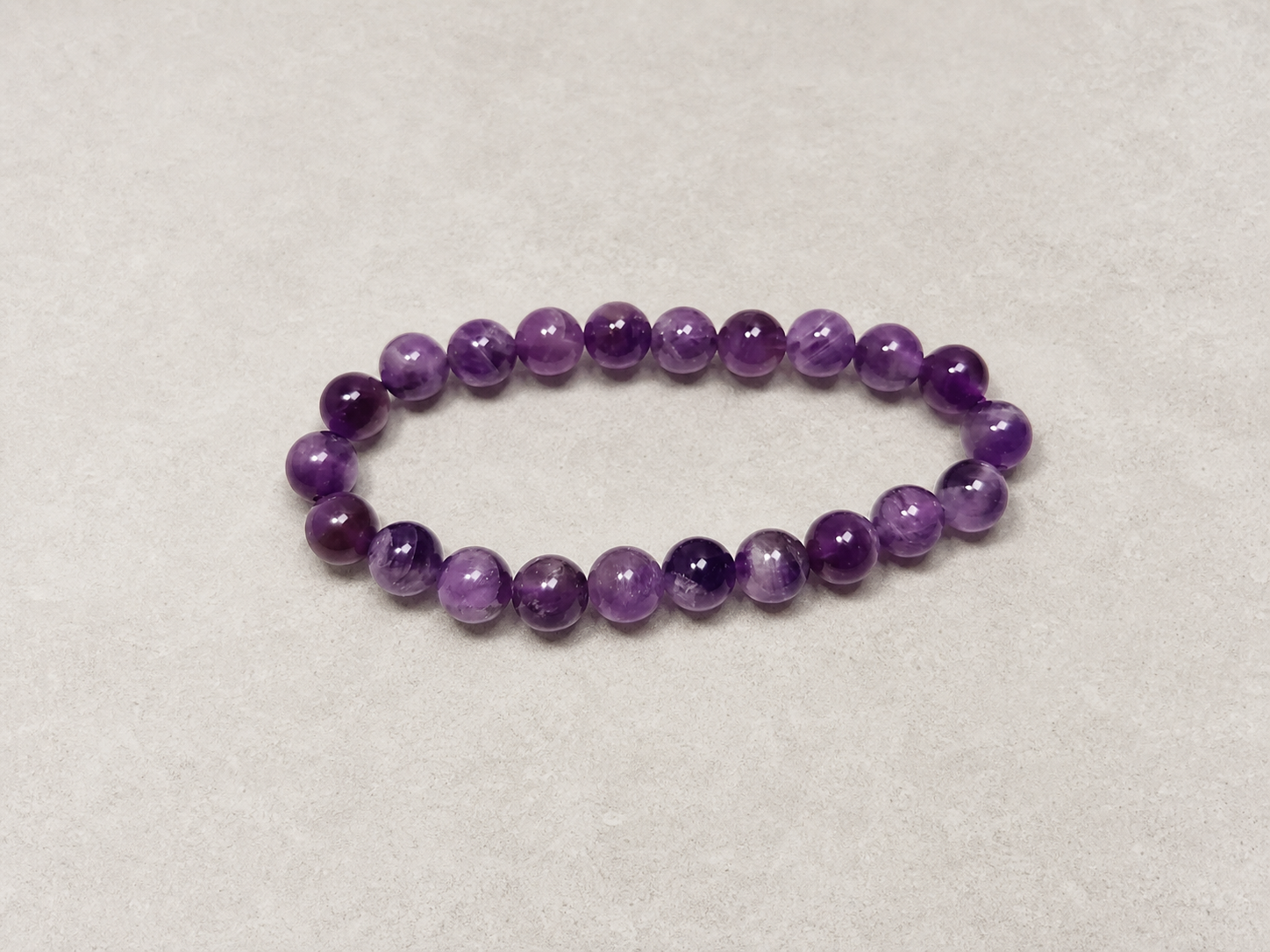
Amethyst is purple quartz. The GIA amethyst overview identifies amethyst as quartz and describes its purple color. This information supports general material education, not the identity of a bead in a particular product.
Some wearers connect amethyst with peace and balance symbolism. That does not create a required wrist. For the specific topic, read which hand should you wear an amethyst bracelet on.
Black Obsidian Bracelets
Black obsidian is often discussed through boundaries and grounding symbolism. Practical wear still comes first. Aura & Crysta has a dedicated black obsidian wrist guide and a separate guide on how to wear a black obsidian bracelet.
Tiger Eye and Mixed-Bead Bracelets
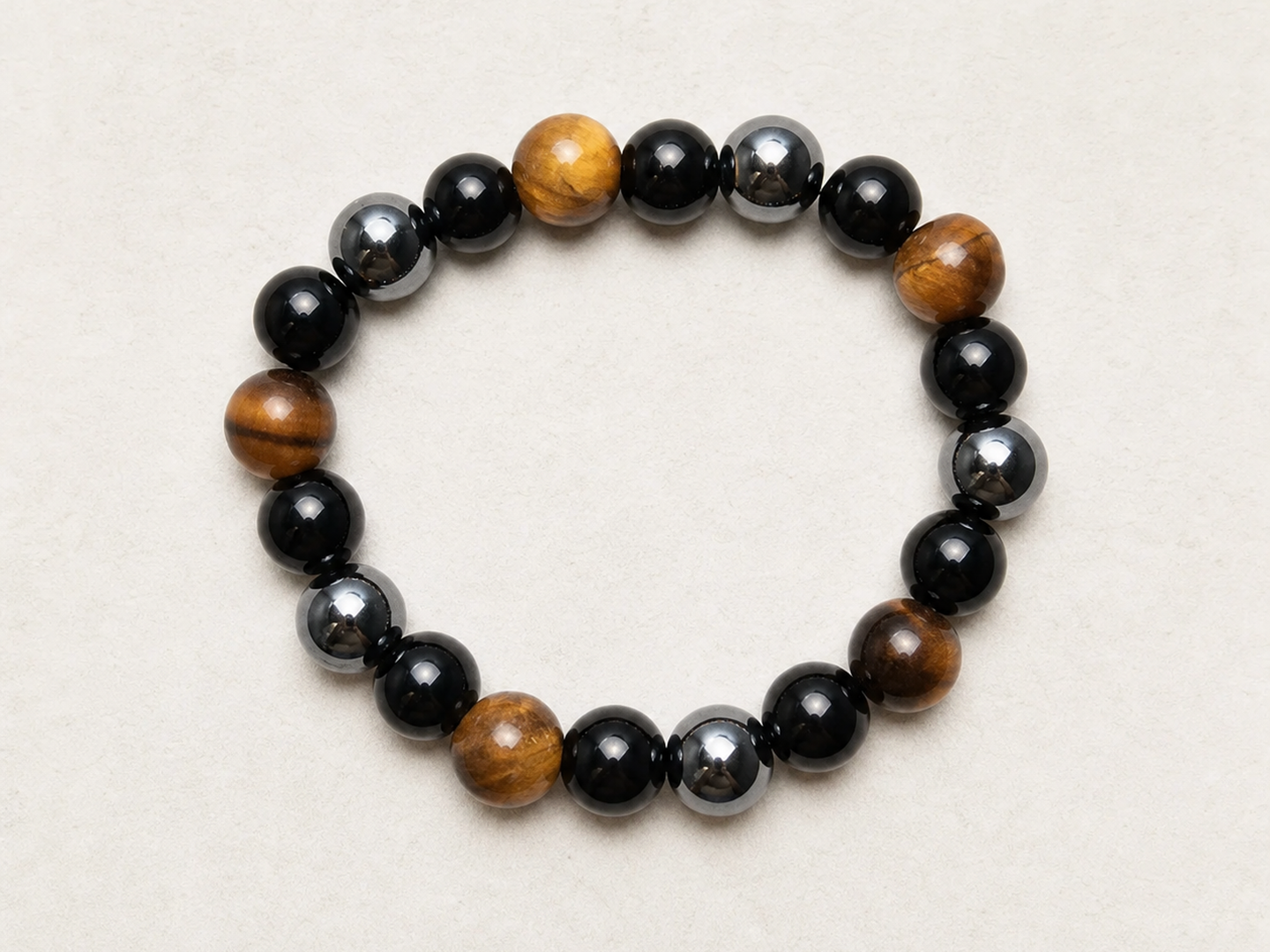
A mixed design may include several colors and symbolic themes, but it does not require a new wrist rule. Consider how the arrangement sits, whether it rotates, and whether it works beside a watch. Women looking for tiger-eye-specific guidance can use the article on which hand a woman may wear a tiger eye bracelet on.
Hematite Bracelets
Hematite-related advice sometimes introduces magnetic or wellness claims. Avoid those assumptions. Wrist choice should be based on comfort, the product's confirmed construction, and optional symbolism. A dedicated hematite wrist guide can address that narrower intent without making the broad guide own it.
How to Test a Bracelet on Both Wrists
Step 1: Review the Product Information
Look for measurements, fit notes, clasp or stretch information, material wording, and care instructions. If these details are missing and important to you, ask the seller instead of estimating from a photo.
Step 2: Put It On According to Its Design
Do not pull one bead, charm, or focal element unless the confirmed construction calls for that method. Handle the bracelet evenly.
Step 3: Test Normal Movement
Open and close your hand, rotate your wrist, type, write, and reach for objects. The bracelet should not pinch, restrict, or repeatedly catch.
Step 4: Check Contact With Other Items
If you wear a watch, try the bracelet on the opposite wrist first. If you stack pieces, check whether hard surfaces rub constantly.
Step 5: Repeat on the Other Side
Use the same movements on the second wrist. Choose the side that creates less interference.
When Should You Change Wrists or Remove the Bracelet?
Changing sides is reasonable when your activity changes. Remove the bracelet before bathing, swimming, heavy exercise, cleaning, or work that may pull, scratch, strike, or wet it.
Also remove it if it feels uncomfortable, if the construction appears damaged, or if it interferes with safety equipment. Jewelry should not override workplace instructions or common sense.
How to Use Symbolism Without Creating Rigid Rules
Treat symbolism as a personal layer after practical wear:
- Choose a theme that genuinely matters to you.
- Avoid claims that one side will cause a result.
- Do not assume the same tradition applies to every material.
- Do not tell another person that their wrist choice is wrong.
- Revisit the choice if the bracelet is uncomfortable.
This approach respects cultural and personal meaning without turning jewelry into a promise.
Choosing a Bracelet for Everyday Wear
Before buying, check the visible design and the disclosed facts. A photo may show color, polish, bead arrangement, and decorative elements. It cannot by itself verify mineral identity, processing, origin, grade, certification, size, or construction.
Review:
- current product photos;
- exact material wording;
- available measurements and fit notes;
- care instructions;
- price and stock;
- shipping and return information.
Aura & Crysta's Crystal Bracelet Guides organizes the material-specific meaning, care, buying, and wearing pages. Use the broad hub to find the dedicated answer instead of relying on one rule for every bracelet.
To compare the products currently offered, visit the Shop. The Peace & Balance collection supports amethyst and purple-stone interests, while Protection & Luck supports the Pixiu and mixed dark-bead designs. Collection names describe shopping and symbolic themes, not outcomes.
Final Wrist-Choice Checklist
- Which hand is less active during my routine?
- Does a watch occupy one wrist?
- Does the bracelet stay comfortable while I type and write?
- Am I using confirmed fit and construction information?
- Does it rub against other jewelry?
- Should I remove it for water, exercise, or hands-on work?
- Am I treating left-versus-right meaning as optional symbolism?
Frequently Asked Questions
Which hand to wear a crystal bracelet for everyday use?
Begin with the non-dominant wrist, then test both sides during normal tasks. The most comfortable side is usually the better practical choice.
Is the left wrist always the receiving side?
Some contemporary traditions use that interpretation, but it is not a universal product rule. It can be personal symbolism without promising a result.
Can I wear crystal bracelets on both wrists?
Yes, if the pieces fit comfortably and do not interfere with movement. Avoid crowded stacks that rub, catch, or feel heavy.
Does a protection bracelet have to go on the right wrist?
No. Protection is often a symbolic theme. Choose the wrist based on comfort and use the material-specific guide if you want to understand a particular tradition.
Can I switch the bracelet from one hand to the other?
Yes. You may switch for work, a watch, an outfit, or comfort. There is no requirement to keep it permanently on one side.
Final Takeaway
The best answer to which hand to wear a crystal bracelet is not a rigid left-or-right rule. Start with the non-dominant side, test normal activity, compare both wrists, and follow the actual product's fit and care information.
Use symbolism only when it adds personal meaning. For material-specific advice, continue through Crystal Bracelet Guides rather than applying one broad interpretation to every bracelet.
Crystal meanings and Feng Shui symbolism are for spiritual, cultural, and decorative purposes only. They are not medical, financial, or guaranteed-result claims.