
An amethyst bracelet price cannot be judged by one universal number. Bead color, visible variation, workmanship, design complexity, disclosed materials, seller information, and after-purchase support can all affect the asking price. A higher price does not automatically prove that a bracelet is natural, and a low price does not automatically prove that it is imitation.
The better buying method is to compare what is actually disclosed. This guide explains the factors behind price, what a product page should tell you, and when a claim needs more evidence.
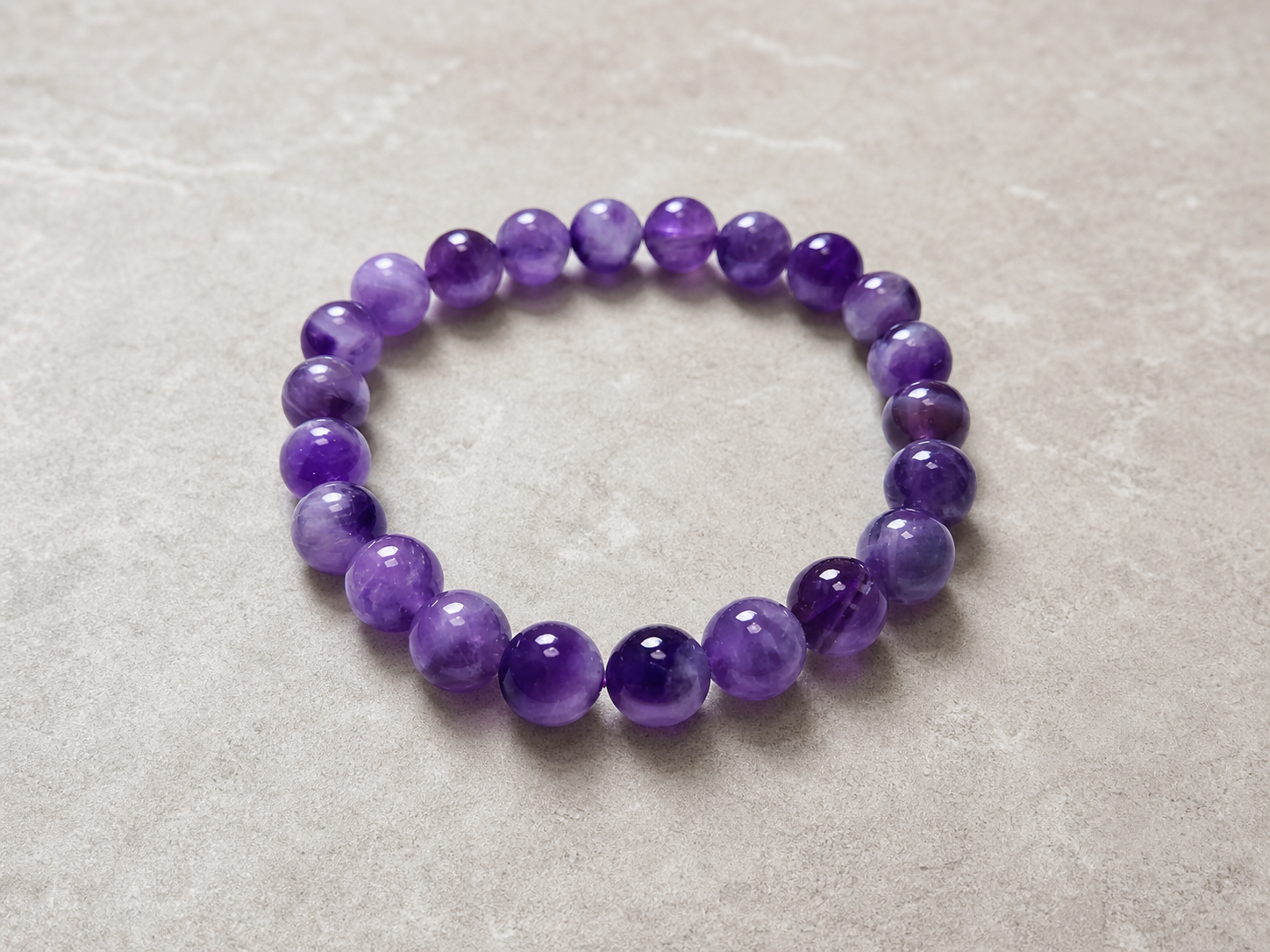
Amethyst Bracelet Price: Quick Answer
A simple beaded bracelet and a custom fine-jewelry piece can sit in very different price ranges. Instead of looking for one “correct” price, ask whether the price is supported by:
- clear material wording;
- useful photos from several angles;
- visible color and bead variation;
- stated size and construction information when available;
- workmanship and design details;
- included metal or decorative components;
- seller contact, shipping, and return information;
- independent documentation when a high-value claim depends on it.
Pay for disclosed value, not a label such as AAA, premium, or rare without an explanation.
Why Amethyst Bracelet Prices Vary
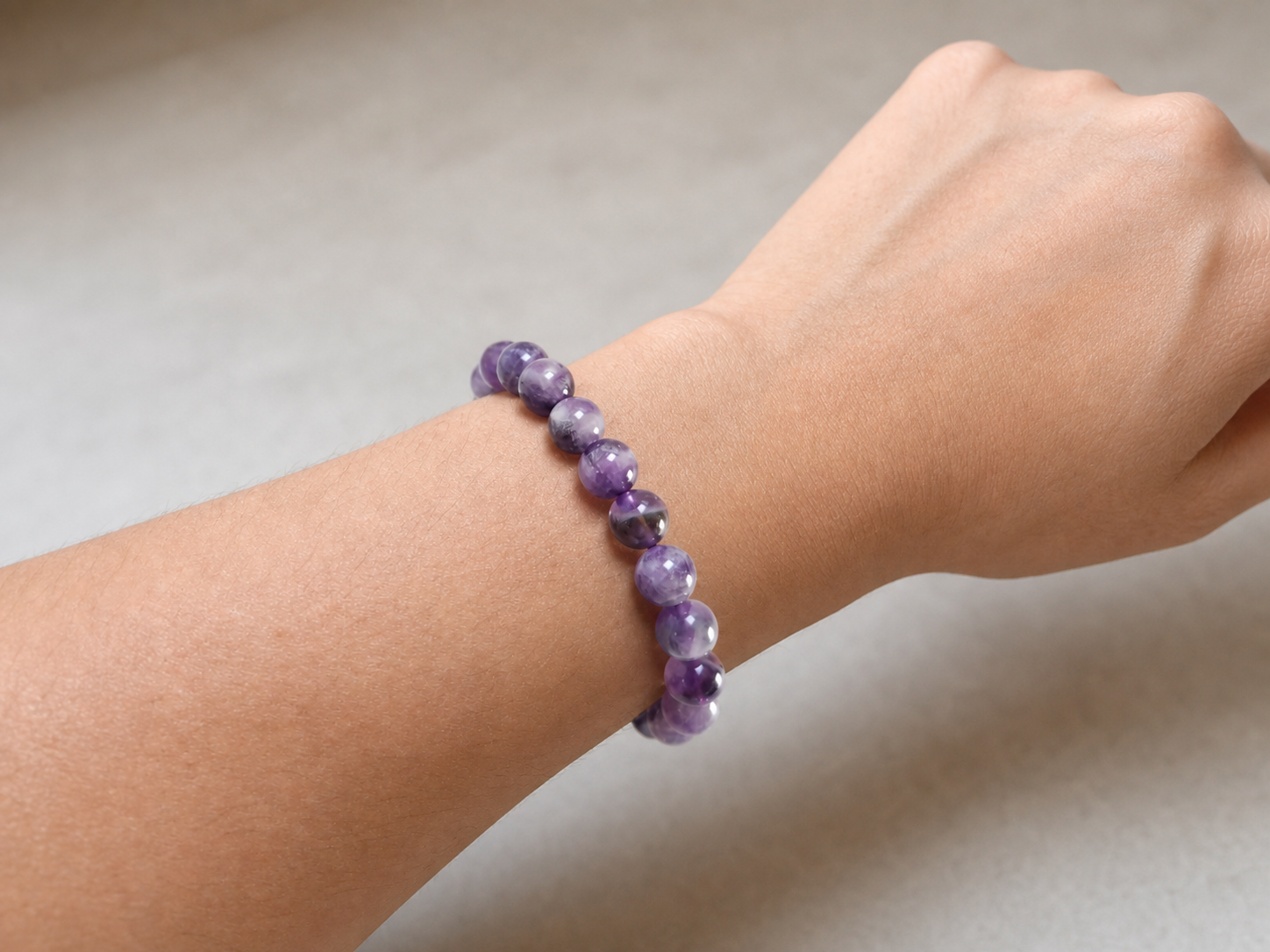
Color and Visible Consistency
Amethyst can range from pale violet to deep purple. Color strength, unwanted tints, and zoning affect the value of cut amethyst, although a beaded bracelet is also judged as a complete design.
The GIA amethyst buyer's guide explains that color is a major quality factor and that origin alone does not determine value. This general gemological guidance helps buyers ask better questions, but it does not grade a bracelet shown online.
For beads, compare the strand as a whole. Some buyers want a closely matched purple tone; others prefer visible natural variation. Neither preference proves identity.
Clarity and Natural-Looking Variation
Beads may show translucent areas, internal features, color bands, or surface differences. Those visible characteristics can affect appearance and matching. They should not be used as a shortcut to declare a bracelet genuine or fake.
Perfect uniformity may come from careful selection, processing, imitation material, photography, or lighting. Visible variation may occur in natural material, but it also is not proof. Use the seller's material statement and supporting information.
Bead Size and Bracelet Length
More material, larger beads, or a longer strand can influence cost. However, a buyer cannot estimate those details reliably from a photo. Use confirmed measurements only.
If a listing does not provide bead diameter or fit information, do not assume that a higher price includes larger beads. Ask before buying when size matters.
Construction and Workmanship
The quality of drilling, polish, spacing, stringing, clasp work, and finishing can affect price and daily usability. These details are different from mineral quality.
A bracelet may cost more because of labor, a custom pattern, precious-metal components, or hand finishing. The seller should explain those features instead of relying only on symbolic wording.
Seller Support and Commercial Terms
Product photography, responsive customer service, secure checkout, shipping support, and a clear return process have real business costs. They can add buyer confidence even though they do not change the stone itself.
Read the current product page and policy pages before ordering. A bargain is less useful when basic fit information is missing or the return process is unclear.
Does a Higher Price Mean the Amethyst Is Real?
No. Price is not a laboratory test. A high price can reflect design, branding, marketing, labor, packaging, scarcity claims, or seller positioning. It cannot independently confirm whether the material is natural amethyst.
Likewise, an affordable bracelet is not automatically imitation. Amethyst is widely used in jewelry, and size does not affect its price in exactly the same way as some rarer colored stones.
If material identity is essential for a significant purchase, request meaningful documentation or use independent testing. Do not rely on price, color, a flame test, a scratch test, or a social-media trick.
For a practical visual and seller-information checklist, read how to choose a real amethyst bracelet.
Be Careful With “AAA” and Similar Grades
Terms such as AAA, AA, or A may be seller-created descriptions rather than universal standards. GIA notes that no standard quality-grading scale exists for AAA-quality amethyst.
Ask what the seller means by the grade. Does it refer to color matching, visible inclusions, polish, bead selection, or something else? A label without criteria should not justify a large price difference by itself.
Natural, Treated, Synthetic, and Imitation Material
These categories are different:
- Natural amethyst: quartz formed in nature and identified as amethyst.
- Treated material: natural material altered to change appearance or durability.
- Synthetic amethyst: laboratory-grown material with properties corresponding to amethyst.
- Imitation: another natural or manufactured material used to resemble amethyst.
Do not assume that an online seller has independently verified these distinctions unless the listing provides support. Product photos alone are insufficient.
What Should a Good Product Listing Include?
Look for:
- A clear product title and material description.
- Full-product and close-up photos.
- Current price and stock information.
- Measurements or fit guidance when available.
- Construction details when available.
- Natural-variation wording where relevant.
- Care instructions.
- Shipping and return information.
- A way to contact the seller before ordering.
Missing information does not always mean the product is poor, but it increases uncertainty. Ask before paying for a feature that is not stated.
When Is a Higher Price Reasonable?
A higher price may be reasonable when the seller clearly supports additional value, such as:
- carefully matched visible color;
- a more complex or custom design;
- confirmed precious-metal components;
- documented material identification;
- skilled hand finishing;
- unusual construction;
- personalized sizing or service;
- stronger after-purchase support.
Only count a feature when it is actually disclosed. Do not infer precious metal, certification, custom work, or origin from appearance.
When Should You Pause Before Buying?
Pause if the listing:
- guarantees an emotional, health, financial, or spiritual result;
- uses a grade without defining it;
- claims rarity without evidence;
- hides the full bracelet in photos;
- provides no useful fit information for a size-sensitive purchase;
- treats price as proof of authenticity;
- pressures you with unsupported scarcity claims;
- conflicts with its own shipping, return, or material wording.
Compare Aura & Crysta's Amethyst Bracelet
Aura & Crysta's Natural Amethyst Bracelet for Peace & Balance is the product connected with this guide. Use the live listing to review the current photos, price, availability, material wording, care information, and any confirmed fit or construction details.
The product name uses Peace & Balance as symbolism. It is decorative jewelry and does not promise an emotional or other result.
For more purple-stone products and guides, visit the Peace & Balance collection.
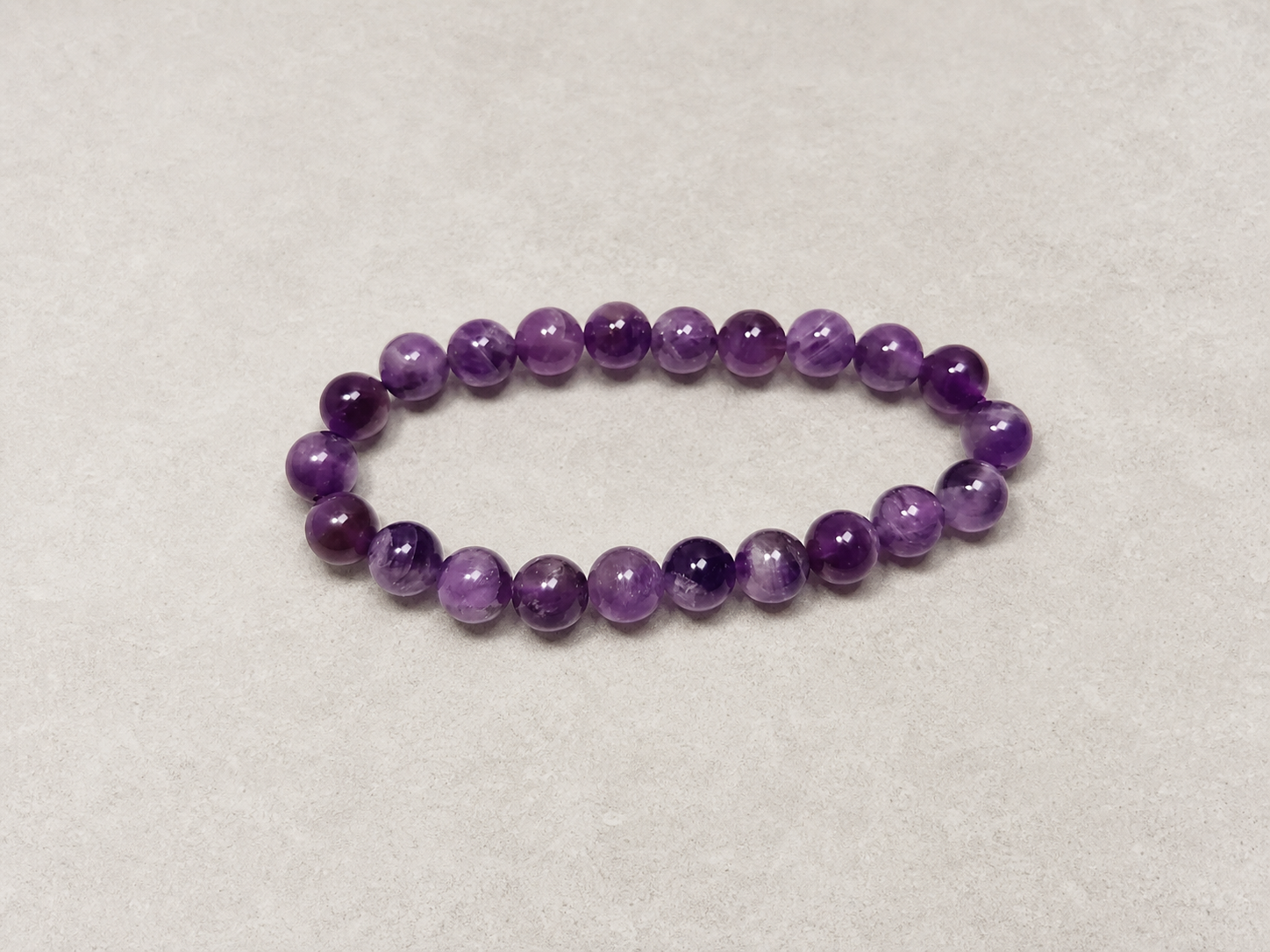
Amethyst Bracelet Price Comparison Checklist
Compare two listings with the same questions:
- What material is explicitly stated?
- Are the photos clear and consistent?
- What visible color and variation do I prefer?
- Are measurements and construction disclosed?
- Is any grade explained?
- Are metal components identified?
- Is documentation included or merely implied?
- What care does the bracelet require?
- What are the shipping and return terms?
- Does the price reflect disclosed value?
Frequently Asked Questions
What is a reasonable amethyst bracelet price?
There is no single correct number. A reasonable price is one supported by the disclosed material, design, measurements, workmanship, seller service, and commercial terms.
Is an expensive amethyst bracelet always natural?
No. Price cannot prove material identity. Use clear seller information and independent documentation when identification is essential.
Does darker purple amethyst cost more?
Color can affect value, but very dark material is not automatically better. Evenness, brightness, unwanted tints, design, and the complete bracelet also matter.
Does visible variation mean the bracelet is real?
Not by itself. Variation can be consistent with natural stone, but it is not conclusive identification.
Should an amethyst bracelet have a certificate?
Not every bracelet includes independent documentation. If a certificate or report is important to the price or your decision, confirm exactly who issued it and what it covers.
Final Takeaway
Judge an amethyst bracelet price by disclosed value, not by one market number or a promotional grade. Compare color, visible variation, workmanship, design, measurements, construction, documentation, service, and return terms.
A thoughtful purchase does not require certainty from a photo. It requires clear information and a seller willing to answer reasonable questions. Continue through Amethyst Bracelet Guides for amethyst meaning, daily wear, wrist choice, and buying support.
Crystal meanings are for spiritual, cultural, and decorative purposes only. They are not medical, financial, or guaranteed-result claims.