
When comparing 6mm vs 8mm beads, the number describes the nominal diameter of a bead, not the size of the finished bracelet. An 8mm bead is wider than a 6mm bead, and a 10mm bead is wider again. That difference helps you compare visual proportions, but it does not tell you whether a bracelet fits your wrist or how heavy it will feel.
Start with the look you want, then check the measurements and construction of the particular bracelet. The comparison below uses simplified circles and separate product designs; it is not a measured trial of one bracelet in three sizes.
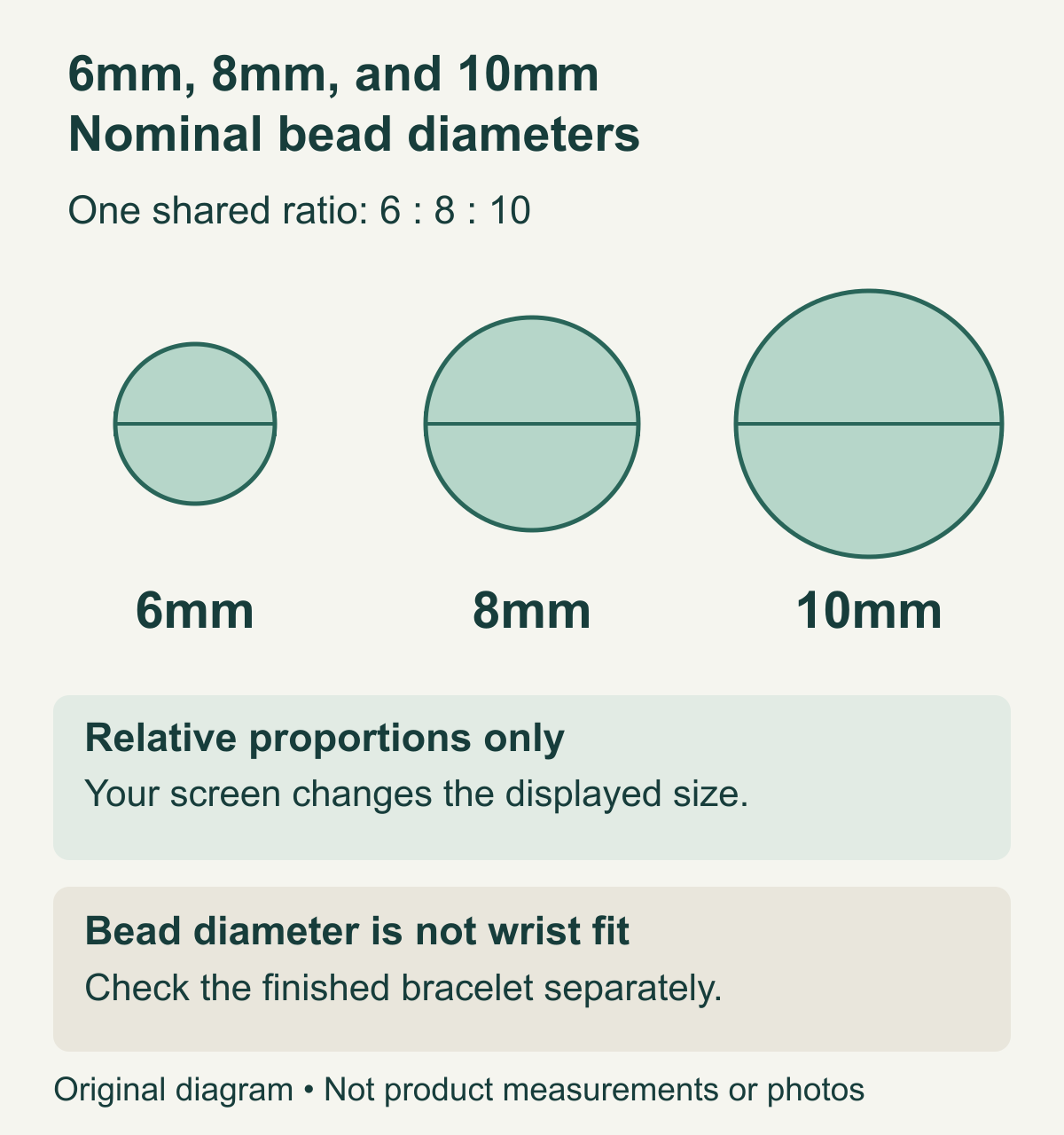
Original diagram of nominal bead diameters in a 6:8:10 ratio. It shows relative proportions, not physical size on your screen or measurements of any product.
How 6mm, 8mm, and 10mm compare visually
6mm: the smallest diameter in this comparison
If you want individual beads to take up less visual space, nominal 6mm beads are a starting point. Look at the whole bracelet, though: several wraps of smaller beads can create a broader arrangement than a single strand. A smaller bead label does not automatically mean a discreet finished design.
8mm: between the two other diameters
At nominal 8mm, each bead is 2mm wider than a nominal 6mm bead. Consider this size if you want a step up in bead presence while comparing it with the larger 10mm option. Color, translucency, accents, and the number of strands can still change which bracelet draws your eye most.
10mm: the largest diameter of these three
A nominal 10mm bead is another 2mm wider than an 8mm bead. If larger individual beads are part of the look you want, this is the largest starting point here. Check the finished bracelet alongside your usual sleeves or other jewelry before deciding that larger beads suit your routine.
These are ways to compare a design, not rules assigning a bead size to a gender, wrist size, or occasion. There is no universally best diameter.
Keep bead diameter separate from bracelet fit
Four different specifications answer different buying questions:
- Bead diameter: how wide an individual round bead is, usually given in millimeters.
- Finished length: the length the seller gives for the assembled bracelet, with its measurement method clarified.
- Inner circumference: the space around the inside of the bracelet; this is not the same measurement as one bead’s width.
- Weight: a separate specification that a photograph or bead-size label cannot establish.
Do not convert a 6mm, 8mm, or 10mm label directly into a wearable wrist size. A single strand, multiple wraps, and different closures need their own fit information. Our guide explains how to measure your wrist and distinguish bracelet length before you compare a seller’s specifications.
If sleeve clearance or comfort matters to you, ask about the finished construction and weight of the selected version. This comparison does not establish that one diameter will always feel lighter, sit lower, or be more comfortable.
Read the size label on each separate design
These catalog examples illustrate how bead-size descriptions vary. They are different bracelets, not a matching three-size series.
- Three-Wrap Amethyst Bead Bracelet: the recorded size options include 5mm, 5–5.8mm, and approximately 6mm. Check which option you select; “approximately 6mm” must not be treated as an exact measurement for every version.
- Smoky Quartz Bead Bracelet – 8mm: an example labeled 8mm with a single-strand design.
- Golden Tiger Eye & Mixed Quartz Bracelet – 10mm: a separate mixed-material design labeled 10mm.
A nominal size is the stated size used to describe the option. An approximate label or range adds an explicit qualification; do not erase it when comparing products. Check the current selected option and availability on its own page. A parent listing can describe several options without confirming that every option is available.
Use photographs for appearance, not a measuring scale
Two product photos can be cropped or displayed at different sizes. A bead filling more of one image does not prove it has a larger diameter than a bead in another image. The same applies when a photo is enlarged on a phone.
Use photos to review the visible arrangement, colors, and details. Use the selected product’s written specifications for the nominal bead size. If you need a closer size comparison, ask for a clearly identified photo beside a ruler, with the item and measurement confirmed by the seller. Do not estimate finished weight or inner circumference from a photo.
A short checklist before choosing
- Choose your preferred visual proportion. Compare the smaller, middle, and larger diameters without assuming one is right for every wearer.
- Identify the exact design and option. Keep single-strand and wrap bracelets separate, and retain any “approximately” wording.
- Confirm fit independently. Ask for the finished dimensions and how they were measured.
- Resolve practical questions. If weight, sleeve clearance, or a particular closure affects your choice, ask about that feature directly.
For material-specific purchase questions, continue with choosing an amethyst bracelet. For style and routine, see choosing amethyst for daily wear. You can also browse our bracelet buying guides for the next question in your decision.