
To clean pearls after everyday wear, gently wipe them with a clean, soft, dry cloth. For a pearl bracelet that also contains other beads, thread, metal fittings, or glued parts, check the care instructions for the complete piece before adding water or a cleaner. A method suitable for pearls alone does not automatically suit the whole bracelet.
This guide explains how to clean pearls conservatively, when to pause before wet cleaning, and how to store a mixed-material bracelet without rubbing it against harder jewelry.
Check the whole bracelet before cleaning
Start with the seller’s material and care information. Look beyond the word “pearl”: the string, knots, clasp, spacers, coatings, and any other beads can affect which cleaning method is appropriate. If the instructions cover only one material, ask whether they also apply to the finished bracelet.
Examine the piece without pulling or scraping it. If you notice loose components, frayed thread, flaking surfaces, or a damaged clasp, stop and ask the seller or a jeweler for advice before cleaning. Rubbing harder will not repair a damaged surface or a weak connection.
How to clean pearls after wearing them
- Set up a soft surface. Take the bracelet off and place it on a clean cloth, away from other jewelry and gritty surfaces.
- Use a clean, soft, dry cloth. Wipe accessible pearl surfaces lightly. Support the bracelet as you work instead of pulling on the strand or bending its fittings.
- Leave stubborn marks alone. If a mark does not lift with gentle wiping, do not increase pressure, scrape it, or switch to an abrasive polish.
- Put it away carefully. Check that the piece is dry, then place it in a separate soft-lined compartment or soft pouch where it will not rub against harder jewelry.
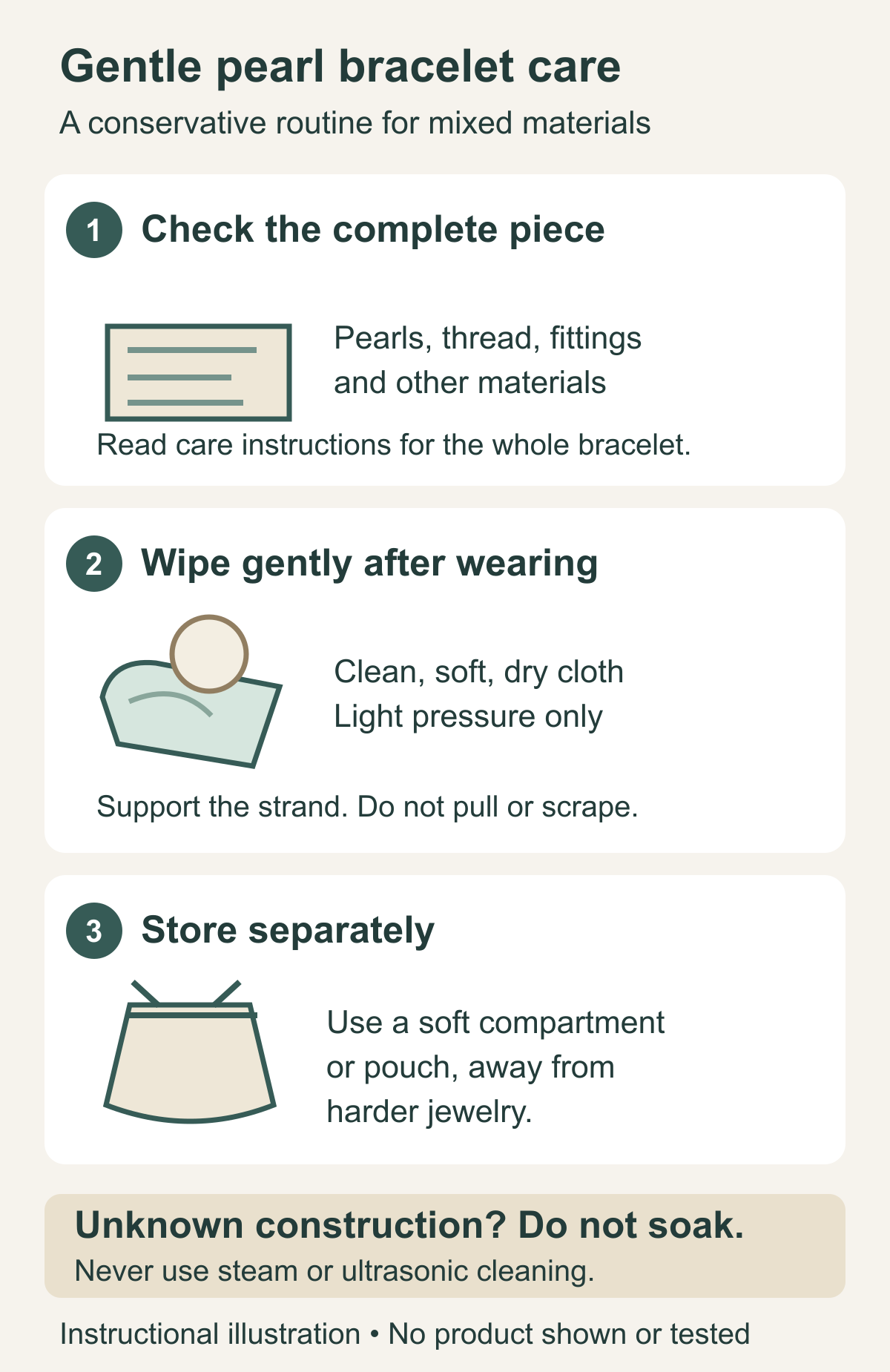
The GIA Pearl Care and Cleaning Guide recommends a soft, clean cloth after wearing pearls and explains that pearls are vulnerable to scratches and abrasion. It also advises against ultrasonic and steam cleaning. Those limits are a reason to keep routine care gentle.
When water needs a separate decision
GIA discusses occasional cleaning with warm, soapy water for pearls and says the string should be completely dry before the jewelry is worn again. This is general pearl-care guidance; it does not establish that an unfamiliar bracelet’s elastic, glue, metal finish, or mixed beads can be immersed.
Before wet cleaning, obtain instructions that apply to every part of your bracelet. Ask which cleaner is suitable, how it should be applied, and how the piece should dry. A statement about one bead’s material is not enough to fill in those details.
If the construction or care instructions are unknown, stay with gentle dry wiping. Do not soak the bracelet to see what happens, use steam or an ultrasonic machine, or apply household cleaners. Heat, certain chemicals, and acids can damage pearls; a stronger treatment is not a reliable solution to a mark that resists wiping.
If the bracelet gets wet accidentally
Remove it and gently blot visible moisture with a soft cloth. Let it dry without direct heat, and avoid pulling on the strand. Do not wear it again while the string remains damp. If you cannot assess the construction or notice a change in the surface, thread, or fittings, ask the seller or a jeweler what to do next.
Removing a pearl bracelet before showering, swimming, or washing dishes avoids making an unsupported assumption about the finished piece’s water resistance.
Apply the same check to mixed-material designs
A design listed as the Amethyst & Freshwater Pearl Double-Strand Bracelet combines material labels and a construction description. That name helps you identify what care questions to ask; it does not establish the water tolerance of the thread, adhesive, metal, or any finish.
For a piece like this, ask for care instructions for the entire double-strand bracelet. Follow the most restrictive confirmed requirement among its components, and keep unknown components out of a wet-cleaning routine. Do not apply a cleaning method intended for another stone simply because that stone appears in the same design.
Storage and marks that cleaning may not fix
Store a pearl bracelet where neighboring pieces cannot scrape against it. A separate soft compartment keeps a metal clasp or harder bead strand from rubbing across the pearls. Keep the piece away from high heat and contact with household chemicals.
Yellowing, fading, a dull patch, or a change in a coating is not necessarily removable dirt. Gentle cleaning cannot be promised to reverse a color change or return a bracelet to its original appearance. Avoid bleaching or repeated polishing, and seek advice if the change persists.
Common pearl-bracelet care questions
Can I use the same method for all pearl jewelry?
No single wet-cleaning method can be assumed to suit every finished piece. A string of pearls, a glued setting, and a bracelet with several materials introduce different questions. Begin with soft-cloth care and follow instructions for the specific construction.
Does a freshwater pearl label mean the bracelet is waterproof?
No. The label does not establish the water resistance of the bracelet’s other components or provide a soaking procedure. Confirm those details separately.
What if a soft cloth does not remove the mark?
Stop before trying a harsher method. Ask the seller or a jeweler whether the mark is likely to be dirt, wear, or a surface change, and which treatment is appropriate for the complete piece.
For other materials, choose the relevant article in our bracelet cleaning and care guides and keep each piece’s own care instructions with it.